From the WTF files comes another Ewok masterpiece. A while back I made up some pictures of an Ewok pumping iron on Muscle Beach because of some talk between my co-workers and I. This led to us discussing other Ewok themed Photoshop projects, and Ewok Mona Lisa was one of the best ones mentioned. Well, it took me a while to actually do it, but I think it came out rather well.
Return of the One-Armed Swordsman [獨臂刀王] (1969)
AKA One-Armed Swordsman Return, Le Bras de la vengeance
Starring Jimmy Wang Yu, Lisa Chiao Chiao, Essie Lin Chia, Chung Wa, Cheng Lui, Hoh Ban, Tien Feng, Ku Feng, Tung Li, Tang Chia, Lau Kar Wing, Lau Kar-Leung, Yuen Cheung Yan, Ti Lung, Wang Kuang-Yu, Wu Ma, Fong Yau
Directed by Chang Cheh
Expectations: High!
With the original One-Armed Swordsman in 1967, Chang Cheh re-defined what the martial arts film genre was and would be. Over the next two years, countless other films sought to capture audiences as Chang’s film had, but few other directors were able to harness the sheer energy on display in a Chang Cheh film. With Return of the One-Armed Swordsman, Chang doesn’t look to create a direct sequel, or one that feels in any way similar to the original. Instead he goes a completely different and incredibly over-the-top direction, resulting in one of the most fun martial arts pictures of the early Shaw Brothers era, and one that would again help re-define the genre.
The story opens with the one-armed swordsman Fang Gang (Jimmy Wang Yu) being invited to participate in a tournament held by the self-proclaimed Eight Sword Kings. He’s trying to leave the martial lifestyle behind him and live out the rest of his days with his lovely wife as a farmer, but we all know how that works out in films such as this. Master Fang is later visited by a group of swordsman seeking his help, as they know the so-called tournament is just a ruse to call all the sword clans together so that the Eight Sword Kings can murder the masters and take control of the region by force. Where your martial arts soaked 2012 brain might expect something of a tournament film after this setup, instead we receive something closer to a journey film where our heroes are sequentially ambushed and assaulted at every turn on their way to the “tournament.”
Starring Evan McGuire, Christen Mooney, Brendan Gleeson, Mick Lally, Liam Hourican, Paul Tylak, Michael McGrath, Paul Young
Directed by Tomm Moore & Nora Twomey
Expectations: Low. It doesn’t look like something I’d care about.
I think this one is more of a case of “not for me” than actual poor quality. I’m unable to tell definitively, but for my money The Secret of Kells was long, boring and somewhat harsh on the eyes. Strong words for a film that garnered high praise from nearly all critics, and earned a coveted Oscar nomination for Best Animated Film, but that’s the way the cookie crumbles. Let’s start with the long, boring part. The Secret of Kells is only just over an hour in length, but it feels like three. I was unable to engage with the story right from the get-go so that’s probably why the damn thing felt so long. I tried though, Lord did I try, but at nearly every turn I was bored. There are some genuinely great moments sprinkled here and there, but by the time they arrived I was already so checked out they failed to truly resonate.
And now for the visuals. I get what they were going for: taking influence from the art of the time the story depicts (the 7th century) and running wild with it. This is a fantastic idea and has worked well for films previous, but the thing is that The Secret of Kells actually looks more like something from the workshop of Genndy Tartakovsky, the man behind Samurai Jack, The Powerpuff Girls and Dexter’s Laboratory. I’ve only watched Samurai Jack in any real sense, and I absolutely love that show. What’s interesting about that is that I love it in spite of its art style and character design. I’m not especially fond of the art overall, but the great characters and the level of filmmaking skill and inventiveness exhibited in Samurai Jack is amazing, impressive and thoroughly entertaining. When The Secret of Kells looks pretty much exactly like that, but features little to none of these positives, I can’t help but be bored.
Film is a visual medium and visual aesthetics are one of my most important criteria for liking a film. I didn’t care for the visuals, so it was really hard to get through this one. The film did completely enthrall my cat though, so that’s something. I don’t think it’s so much that The Secret of Kells is a bad movie, but that I just couldn’t connect with it. It is impressive that a small, independent studio can crank out an animated film of this technical quality though. Watch the trailer and if the visuals don’t bother you, you just might get a good time out of this one. All others, look elsewhere.
Starring Corbin Allred, Jennifer Burns, Derek Webster, Barrie Ingham, Jonathan Charles Kaplan, Michael C. Mahon, Stacy Sullivan, Helen Siff, Charisma Carpenter, Johnny Green
Directed by Frank Arnold
Expectations: Low, but very much excited to be done with these!
On the general scale:
On the B-Movie scale:
At long last I find myself at the end of the lengthy Josh Kirby film sextet. It wasn’t easy, and it wasn’t always enjoyable, but damn if I didn’t get a few quality moments of WTF joy. I’m happy to report that one of the best of these comes in this film, the aptly titled entry: Last Battle for the Universe. While it is the last film, and there is a battle contained within, don’t get your hopes up for an epic confrontation between good and evil that will shake the pillars of the Earth. Nope, here it’s more along the lines of Josh Kirby wearing a thimble/bucket helmet and trading laborious blows with the evil villain contained in the time armor.
Once again, a Josh Kirby film is fairly unintelligible. I always get through the first few minutes following these pretty well, but as boredom and exhaustion sets in, I’m unable to keep up with all the lengthy jargon-driven dialogue exchanges. What I was able to decode was this: after finally retrieving the final Nullifier component, Josh’s time buddy Irwin 1138 reveals himself to be the true villain! As I suspected a couple of films ago (I think it was hinted at in Trapped on Toyworld), the evil Dr. Zoetrope is actually a nice guy. This is a change for the better, as I always thought his character was far more interesting and likable than Irwin’s. Anyway, Irwin steals Zoetrope’s time armor and whisks himself away. Where he goes is for later, as first Josh Kirby must probe the mind of Zoetrope to prove that he’s telling the truth (Read: Full Moon gets lazy once again and shows us a few minutes of footage from the previous films). It is after this blatant offering of stock footage that we finally find out where Irwin got off to, and it is here that the film hits an absolute high of insane, mind-boggling proportions.
Starring Richard Widmark, Bella Darvi, Victor Francen, Cameron Mitchell, Gene Evans, David Wayne, Stephen Bekassy, Richard Loo
Directed by Samuel Fuller
Expectations: Low. This is Fuller’s least favorite film according to his book.
Hell and High Water begins in classic Sam Fuller style, hitting hard with a stunning image designed to immediately excite the viewer and grab hold of their attention. The particular image that opens this Fuller film is a giant nuclear explosion on a remote island (which is actual footage of a test blast by the military), and we’re quickly told via narration that it’s this explosion that the film is about. Sort of. The explosion is more like the catalyst to the film and its climax, but I guess you could say that the explosion informs the entire film and gives tension to the events presented within. That’s kind of a stretch though. This conflicted feeling I have is representative of how I feel about the entire film.
Going into Hell and High Water I had virtually no idea what the film was about. All I knew was that it was a Sam Fuller film, that it was something of a military film, that it was a bigger budget studio picture made as a favor, and that it was Fuller’s least favorite of his pictures. Like the opening explosion, the knowledge that Fuller didn’t like this one informed my viewing of the film. To my surprise though (and realistically I shouldn’t be surprised), Hell and High Water is pretty damn fun, and exceedingly well produced. It is Fuller’s first film in color, as well as his first CinemaScope film and he wastes no time in utilizing both to great effect.
Starring Jimmy Lin Chung, Lily Ho Li Li, Lo Lieh, Essie Lin Chia, Mui Yan, Chu Gam, Yee Kwan, Nam Wai-Lit, Man Lei, Au-Yeung Gwong, Yip Dung-Ching
Directed by Chang Cheh
Expectations: I really don’t know what to expect. Not much.
Well, this one certainly blew whatever expectations I had out of the water! Having taken wuxia to the highest heights he thought it could reach at the time with his previous film Golden Swallow, Chang Cheh sought to liberate himself from the standard Shaw Brothers cycle of constantly making wuxia pictures one after another. Instead he turned his attention to musicals of all things, and the resulting effort is The Singing Thief. Don’t be fooled by the title though, it’s not really a musical in the traditional sense.
The story of The Singing Thief revolves around Diamond Poon, a reformed diamond thief who’s now known for his wonderful singing voice. He works in a nightclub run by his good buddy Fu and he’s content to keep his life simple. Someone else has a different life path in mind for Poon though, as a new thief in town is accurately impersonating his trademarks and making everyone think that Poon’s up to his old tricks. He could be, and the mystery of just who is stealing everyone’s jewelry is one of the best parts of the film. In some ways it reminded me of The Big Lebowski, where an innocent dude gets mixed up in a sea of people all out to get him and play him for their own interests, but realistically that foundational story has its roots in places far older than The Big Lebowski, such as Dashiell Hammett’s groundbreaking 1929 novel Red Harvest (itself a huge influence on film, particularly on the work of Akira Kurosawa & Sergio Leone).
Starring Sho Kosugi, Jean-Claude Van Damme, Doran Clark, Bruce French, Vladimir Skomarovsky, William Bassett, Kane Kosugi, Shane Kosugi, Dorota Puzio, Jan Tríska, Gene Davis, Alfred Mallia
Directed by Eric Karson
Expectations: Sho Kosugi. JCVD. I heard it’s bad, but I gotta see it!
On the general scale:
On the B-Movie scale:
Hot off the heels of the amazing Bloodsport, Jean-Claude Van Damme landed the main villain role in this Sho Kosugi vehicle, and regardless of whatever flaws the film has, it definitely delivers on the schoolyard playground promise of “Sho vs. JCVD!” They face off a few times throughout the film, with two major battles occurring during the closing half hour. I’m getting a bit ahead of myself, but Black Eagle is the type of movie that doesn’t lend itself much to beating around the bush.
Basically a low-budget version of the James Bond film Thunderball (but with better underwater sequences… fuck Thunderball‘s torturous underwater filmmaking), Black Eagle sees Sho Kosugi as the title character: a covert CIA operative capable of fucking up any evildoers holiday plans. An experimental plane went down off the coast of Malta and even though it’s Sho’s scheduled family vacation time, they force him to do the job. How does the U.S. government do that exactly? By picking up his kids and flying them directly into harm’s way in Malta, and then using their presence there to force him into a position where he has no choice but to agree, that’s how! Stand up guys those CIA suits. Of course, he’s not the only one looking for the plane, and this is where JCVD and all the requisite Russian baddies come from. It’s the Cold War as told through a mediocre James Bond rip-off starring two of the screen’s favorite Western martial arts stars.

 Return of the One-Armed Swordsman [獨臂刀王] (1969)
 Starring Evan McGuire, Christen Mooney, Brendan Gleeson, Mick Lally, Liam Hourican, Paul Tylak, Michael McGrath, Paul Young
 Starring Corbin Allred, Jennifer Burns, Derek Webster, Barrie Ingham, Jonathan Charles Kaplan, Michael C. Mahon, Stacy Sullivan, Helen Siff, Charisma Carpenter, Johnny Green
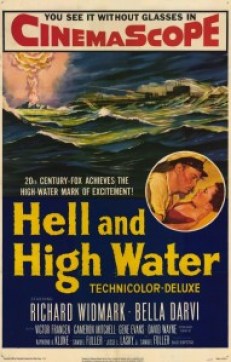 Starring Richard Widmark, Bella Darvi, Victor Francen, Cameron Mitchell, Gene Evans, David Wayne, Stephen Bekassy, Richard Loo
 The Singing Thief [大盜歌王] (1969)
 Starring Sho Kosugi, Jean-Claude Van Damme, Doran Clark, Bruce French, Vladimir Skomarovsky, William Bassett, Kane Kosugi, Shane Kosugi, Dorota Puzio, Jan Tríska, Gene Davis, Alfred Mallia